
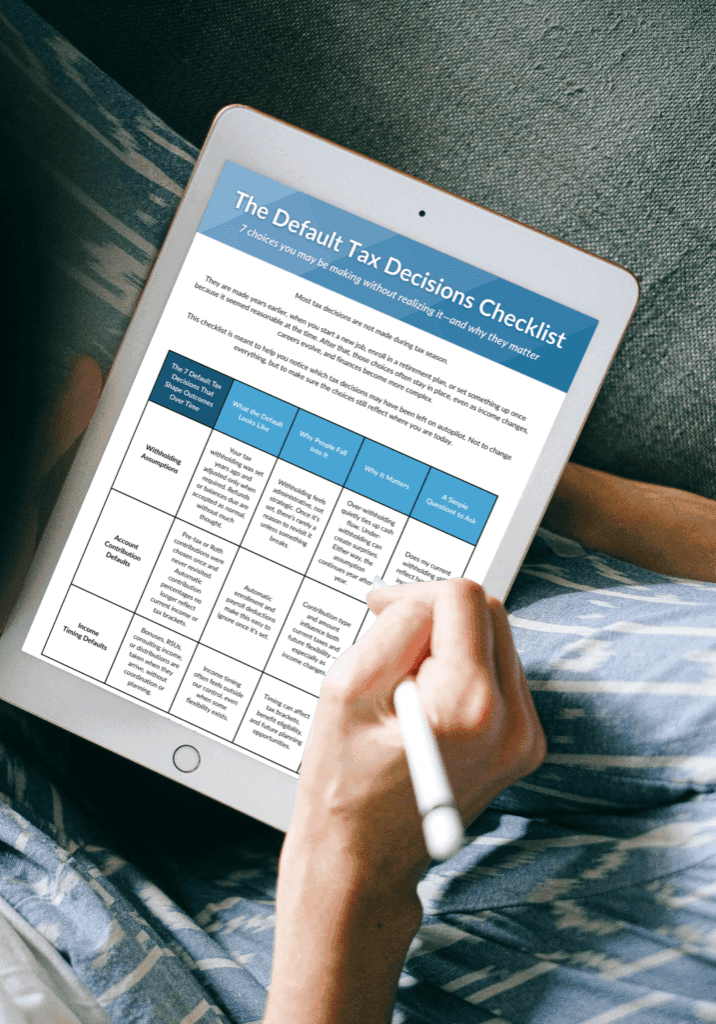
The Default Tax Decisions Checklist
7 Choices You May Be Making Without Realizing It
Most tax decisions do not feel like decisions.
They are settings selected years ago during a job change, a promotion, or an open enrollment period. They made sense at the time. The challenge is that income grows, investment accounts multiply, and priorities evolve, while those original assumptions often remain untouched.
The Default Tax Decisions Checklist is designed to help you identify the tax-related choices that may still be shaping your cash flow, flexibility, and long-term planning, even if they have not been revisited in years.
Inside the Guide, You’ll Learn:
- Withholding and Income Assumptions: How long-standing withholding elections and income timing decisions may influence your cash flow and tax exposure more than you realize.
- Retirement Contribution Structure: Questions to help you evaluate whether your traditional and Roth allocations still reflect your income level and future goals.
- Investment Location and Account Coordination: A framework for reviewing how assets are positioned across taxable and retirement accounts and what that may mean for long-term flexibility.
- Charitable Giving Patterns: Prompts to consider whether your giving approach aligns with both your values and your broader planning strategy.
- Filing and Carryforward Decisions: Areas that often continue year after year without review, even as income and complexity increase.
Why It Matters
A smooth tax filing does not always mean your financial structure is aligned.
Over time, small defaults can compound into meaningful long-term effects. Reviewing them does not mean something is wrong. It simply creates the opportunity to confirm that your current structure supports where you are today and where you are headed.
Using a structured checklist can help you:
- Identify long-standing assumptions that may deserve attention
- Clarify how income and savings decisions interact
- Prepare for more focused planning conversations
- Approach tax decisions with greater intention rather than reacting under deadline pressure
Fill out the form below to download your free guide!