
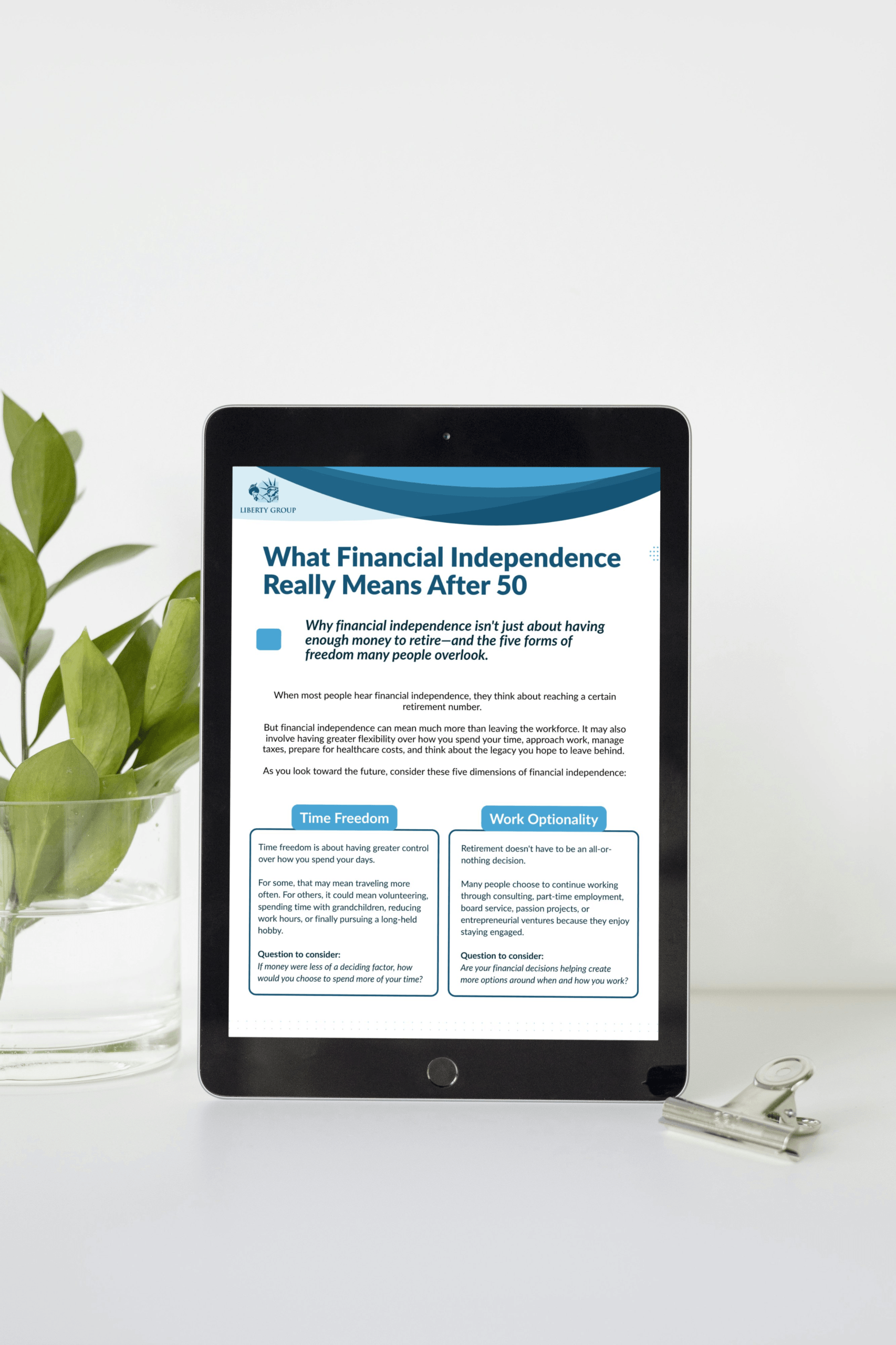
What Financial Independence Really Means After 50
A different way to think about financial independence—and the five forms of freedom many people overlook.
When most people think about financial independence, they think about reaching a retirement number.
But financial independence can also be about having greater flexibility—over your time, your work, your taxes, your healthcare decisions, and the legacy you hope to leave behind.
This guide explores five dimensions of financial independence and offers a simple framework for evaluating whether your financial plan is supporting the future you envision.
Inside the Guide, You’ll Learn:
- How time freedom may shape your retirement experience:
Why financial independence can be about having greater flexibility to spend your time in ways that align with your priorities and goals. - Why retirement doesn't have to be all or nothing:
How many people choose to continue working through consulting, part-time employment, entrepreneurship, or passion projects—and the planning considerations that may come with those decisions. - How tax flexibility can influence future choices:
Why the mix of taxable, tax-deferred, Roth, and cash assets may affect your options for generating retirement income. - Why healthcare planning deserves a place in the conversation:
How Medicare decisions, healthcare costs, and long-term care considerations may play a role in your broader financial picture. - How legacy planning extends beyond estate documents:
Why trusts, charitable giving, family conversations, and wealth transfer planning can all be important parts of defining the legacy you hope to leave behind. - How to evaluate your own readiness:
Use the included Financial Independence Scorecard to reflect on five key areas that may deserve additional attention.
Why It Matters
Taking a broader view of financial independence may help you:
- Think beyond a retirement account balance and consider what financial independence means to you
- Evaluate whether your financial decisions are aligned with your personal goals and priorities
- Identify areas where additional planning may provide greater flexibility in the future
- Start meaningful conversations about retirement, taxes, healthcare, and legacy planning
Fill out the form below to download your free guide!